

The Great Economic Decoupling of 2026: Oil, AI & India
Rising oil prices and booming AI investment are shaping an uneven global economy in 2026. ...
24 October 2026
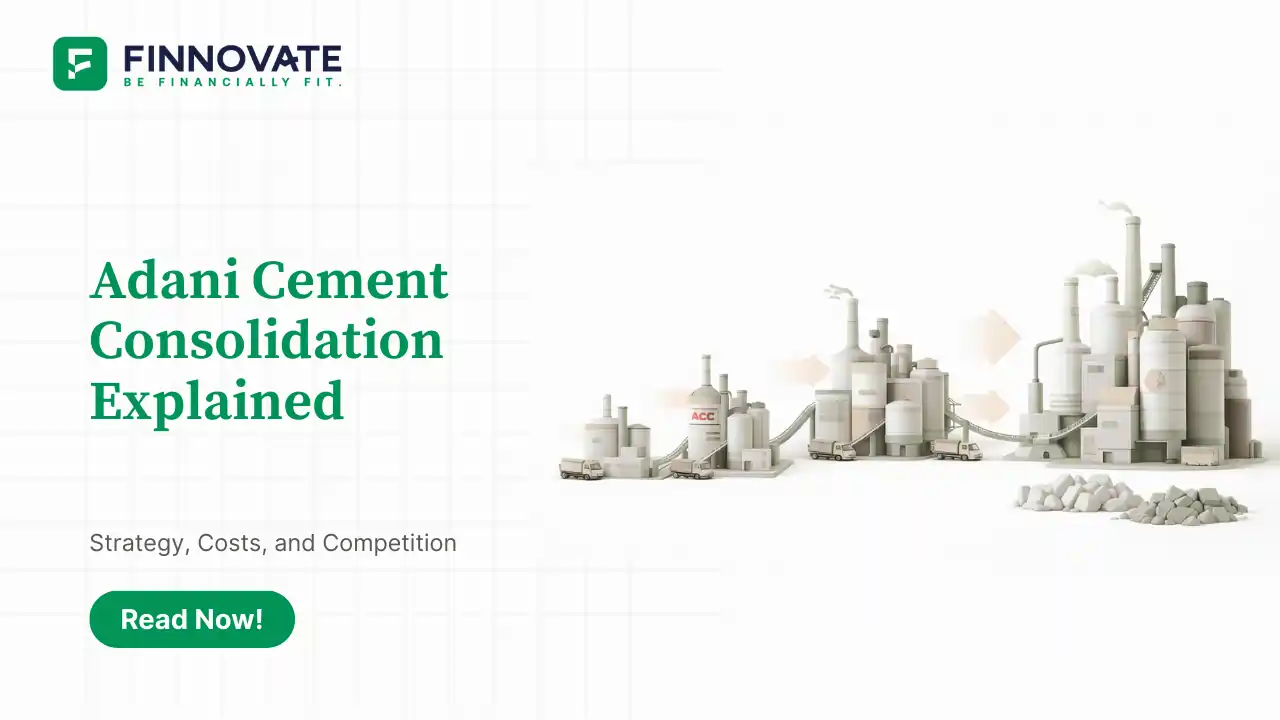
The Adani Group is reshaping India’s cement landscape. In a recent move, it announced the merger of ACC and Orient Cement (CK Birla group) into Gujarat Ambuja. This will be followed by the consolidation of Sanghi Cements and Penna Cements into Ambuja, creating a single, large cement platform.
This is not just another merger announcement. It marks a clear shift in strategy - from rapid inorganic expansion to deep operational consolidation.
When Adani acquired Ambuja and ACC in 2022, it was evident that the long-term plan involved integration. Buying assets was only the first step. Making them work together efficiently is the harder part.
In large industrial businesses, mergers are easier to announce than to integrate. Multiple listed entities, overlapping functions, and fragmented decision-making often dilute the benefits of scale. By bringing these cement companies under a single operating structure, Adani is simplifying the business and setting the stage for tighter control over costs and strategy.
Operating them jointly makes far more sense than running them as separate companies competing for the same resources.
Cement is not a branding-driven business. It is a logistics-driven business.
A large part of cement costs comes from power, fuel, transportation, and raw materials like limestone. Even small inefficiencies in logistics can materially impact margins. When plants, suppliers, and distribution are spread across multiple entities, coordination becomes complex and expensive.
Consolidation allows the company to plan production, sourcing, and dispatch as a single system rather than as isolated units.
The Adani cement franchise operates more than 24 integrated cement plants. Managing logistics across such a wide footprint requires tight coordination.
A single consolidated entity makes it easier to:
In cement, logistics is everything. Centralized decision-making improves visibility and reduces duplication of effort across plants.

Cost savings from consolidation go beyond logistics. Support functions such as human resources, procurement, finance, marketing, training, and IT can now be shared across the group.
Instead of running multiple standalone teams, the company benefits from scale and standardisation. While individual brands may continue independently to avoid market dilution, operations and policies can be centrally managed.
The financial impact of this is significant. Adani expects EBITDA per tonne to improve from around ₹795 to nearly ₹1,250 per tonne over the next three fiscal years, driven largely by these efficiencies.
By March 2026, the consolidated Adani cement platform is expected to reach a capacity of about 118 million tonnes per annum (MTPA). In comparison, Ultratech Cement is expected to be around 183 MTPA by the same time.
Looking further ahead, Adani plans to scale up to 140 MTPA by 2028, while Ultratech could reach close to 240 MTPA.
This clearly shows that Adani is not attempting to match Ultratech overnight. The gap in scale remains large. However, consolidation is a necessary first step if Adani wants to compete meaningfully over the long term.
India’s cement demand outlook remains strong. Infrastructure spending, housing construction, highways, railways, and urban development are expected to drive steady growth in cement consumption over the coming years.
In such an environment, scale alone is not enough. Cost efficiency, logistics control, and operational discipline will determine who benefits most from the demand cycle.
Adani’s consolidation strategy positions it to capture this growth more efficiently rather than simply chasing capacity numbers.
Disclaimer: This article is for informational and educational purposes only and does not constitute investment advice.
No spam. Only new posts, simple explainers, and practical money checklists for busy professionals.
Finnovate is a SEBI-registered financial planning firm that helps professionals bring structure and purpose to their money. Over 3,500+ families have trusted our disciplined process to plan their goals - safely, surely, and swiftly.
Our team constantly tracks market trends, policy changes, and investment opportunities like the ones featured in this Weekly Capsule - to help you make informed, confident financial decisions.
Learn more about our approach and how we work with you:
No comments yet. Start the conversation. What would you add?
No spam. Only new posts, simple explainers, and practical money checklists.
You may also like
Rising oil prices and booming AI investment are shaping an uneven global economy in 2026. ...

Explore FPI equity flows for October First Half, 2026: ₹47,955 crore in net outflows, th...
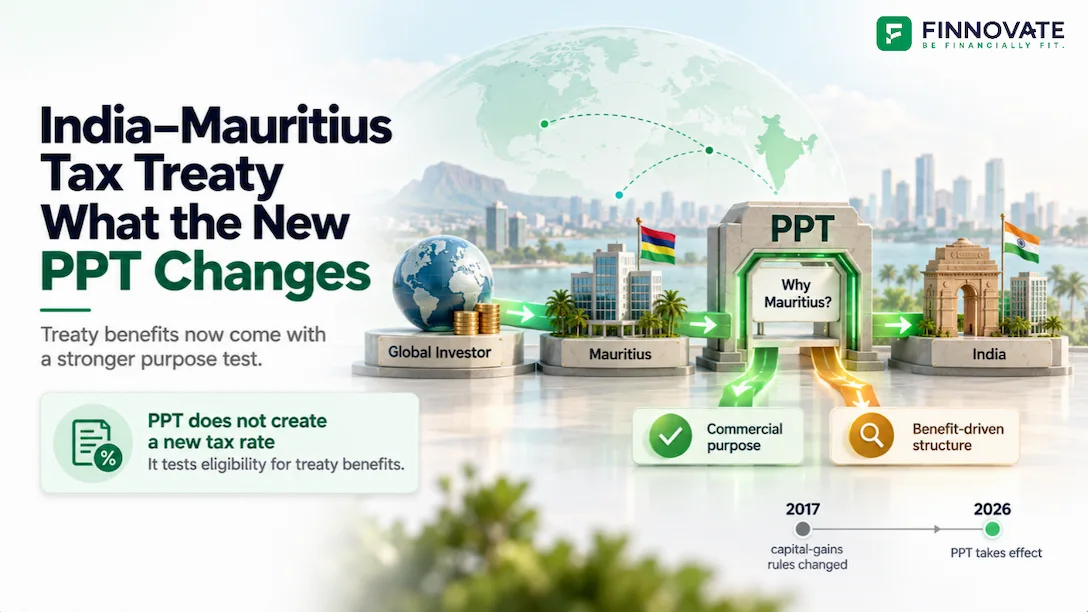
Understand the India–Mauritius tax treaty’s Principal Purpose Test, its August 2026 ef...

Explore India’s AI hardware opportunity through the proposed Adani–Jabil venture, from...
Popular now

Learn how to easily download your NSDL CAS Statement in PDF format with our step-by-step g...

Looking for the best financial freedom books? Here’s a handpicked 2026 reading list with...
Learn what SIF investment means in India, SEBI rules, Rs 10 lakh minimum investment, avail...

Clear guide to mutual fund taxation in India for FY 2025–26 after July 2024 changes: equ...