

The Great Economic Decoupling of 2026: Oil, AI & India
Rising oil prices and booming AI investment are shaping an uneven global economy in 2026. ...
24 October 2026

A few months ago, giving N. Chandrasekaran a third 5-year term as chairman of Tata Sons looked like a smooth, near-certain outcome. That expectation has shifted.
The decision was recently put off after Noel Tata sought assurances from Chandrasekaran on two sensitive areas: the future listing of Tata Sons and the performance of loss-making businesses. On the surface, this looks like a leadership review. Underneath, it is also a governance and capital allocation conversation, and it matters because Tata Sons sits at the centre of a large, complex group.
There is another layer too. Noel Tata chairs the key Tata Trusts that own more than 60% of Tata Sons, and he is widely seen as the successor to Ratan Tata in terms of institutional influence. That changes what the questions mean, and it also changes who ultimately has to solve them.
From the concerns raised, three themes stand out:
Each of these sits at the intersection of control, cash flows, and long-term strategy.
The first assurance Noel Tata is seeking is straightforward in wording and difficult in reality: an assurance that Tata Sons will not be listed in the future.
There is history here. The RBI had asked Tata Sons to get listed. Tata Sons later paid off its deposits and managed to avoid getting listed. In effect, the group moved in a direction that reduced the immediate regulatory push for listing.
Why does listing matter so much?
Because listing brings:
The content also flags a specific concern. A listing could revive questions around the Pallonji group pledging Tata Sons shares to raise funds, which can create headline risk and governance discomfort even if it is legally permissible.
Chandrasekaran’s response, as described, is also predictable. He has underlined that listing is fundamentally a regulatory issue and depends on how the RBI framework is interpreted. That makes it a topic where he may not want to give an assurance, and may not be able to give one even if he wanted to.
So, the listing question is less about personal commitment and more about regulatory posture. In that sense, it sits outside the clean boundaries of internal governance promises.
The second assurance sought is on debt reduction at a group level.
The Tata group has been deleveraging under Chandrasekaran. The numbers in the content are clear:
That is meaningful progress, and it supports the idea that the group’s financial discipline has improved.
So why is Noel Tata still worried?
Because group-level debt becomes a different problem when it is linked to businesses that are:
The specific example referenced is Air India, where debt can start to “pinch” the holding company if the business unit is already eroding net worth. In plain terms, the concern is not debt in isolation. It is the combination of debt plus weak profitability, which can create funding demands that travel upward.
Noel Tata is seeking an assurance on strategies to limit group debt, but Chandrasekaran has been described as non-committal on this issue. The article content also suggests that such an assurance may not be necessary given the deleveraging already achieved, but the holding company exposure angle explains why this remains a live concern.
The third assurance touches the most strategic part of the debate.
Noel Tata has referred to losses in newer businesses like:
The concern is that these ventures have been running up large losses without yet delivering a market share position that feels decisive.
Chandrasekaran’s stance, as captured, is the classic conglomerate long-term argument: these are long-term investments. They may drain capital today, but they are necessary if the group wants to avoid becoming irrelevant in future.
This is a real trade-off for large legacy groups. If they avoid new-age bets entirely, they risk becoming slow-moving and disconnected from where consumer and technology ecosystems are going. If they invest aggressively, they face periods of visible losses and questions on capital efficiency.
The content also points to another example: Tata Semiconductors, described as a tough road but also a billion-dollar opportunity in India. This framing matters. Some bets are not just about returns. They are about ensuring presence in sectors that may define the next industrial cycle.
Chandrasekaran has made it clear that money will have to be invested in these new-age businesses till they stabilise. That is a strategic position. It is also a position that demands strong governance oversight because timelines are long and accountability is harder to define in the early years.
Chandrasekaran could have won the vote, but he preferred the Tata tradition of a unanimous decision. That choice puts greater weight on consensus, and consensus requires that the key shareholder voice is comfortable.
Noel Tata’s influence flows from his role as chairman of the key Tata Trusts, which own over 60% of Tata Sons. He is also viewed as the institutional successor to Ratan Tata. That means the governance questions raised are not just questions to be asked. They are questions that require answers and action from the centre of trust-led ownership.
This becomes even clearer in another issue mentioned: the ongoing stand-off with the Mistry group. The content suggests that even Noel Tata’s demand for resolution here has to be initiated by Noel Tata himself. In other words, if the group wants closure on legacy disputes, the push has to come from the trust leadership that controls the holding company.
The content makes a direct historical comparison.
When Ratan Tata took charge of the group around thirty-five years ago, he made difficult choices, including easing out powerful regional satraps. That was not just a management shift. It was a restructuring of authority and direction.
The implication is simple. If Noel Tata is stepping into that kind of institutional role, the expectation is not limited to oversight. It extends to decision-making on hard issues: governance, capital allocation, disputes, and long-term bets.
This episode highlights a broader point about large groups.
The biggest governance questions are rarely about one chairman’s term alone. They are about:
It also signals that the group’s internal debate is increasingly about how to balance:
Disclaimer: This article is for general information and educational purposes only. It does not constitute legal, tax, investment, or corporate governance advice, and should not be relied upon for decision-making. Please consult qualified professionals for advice specific to your situation.
No spam. Only new posts, simple explainers, and practical money checklists for busy professionals.
Finnovate is a SEBI-registered financial planning firm that helps professionals bring structure and purpose to their money. Over 3,500+ families have trusted our disciplined process to plan their goals - safely, surely, and swiftly.
Our team constantly tracks market trends, policy changes, and investment opportunities like the ones featured in this Weekly Capsule - to help you make informed, confident financial decisions.
Learn more about our approach and how we work with you:
No comments yet. Start the conversation. What would you add?
No spam. Only new posts, simple explainers, and practical money checklists.
You may also like
Rising oil prices and booming AI investment are shaping an uneven global economy in 2026. ...
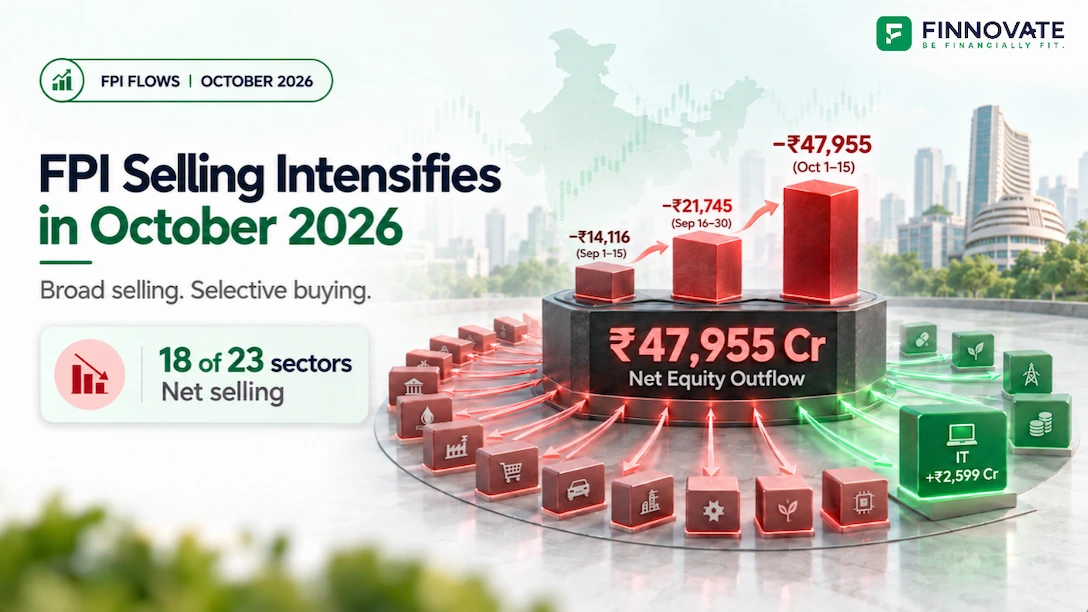
Explore FPI equity flows for October First Half, 2026: ₹47,955 crore in net outflows, th...
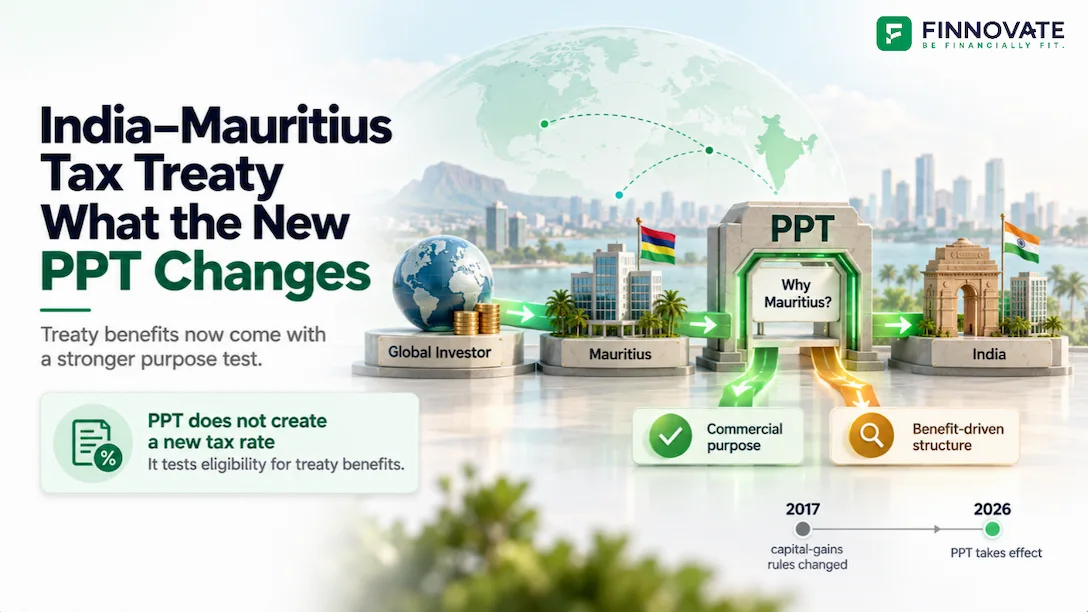
Understand the India–Mauritius tax treaty’s Principal Purpose Test, its August 2026 ef...

Explore India’s AI hardware opportunity through the proposed Adani–Jabil venture, from...
Popular now

Learn how to easily download your NSDL CAS Statement in PDF format with our step-by-step g...

Looking for the best financial freedom books? Here’s a handpicked 2026 reading list with...
Learn what SIF investment means in India, SEBI rules, Rs 10 lakh minimum investment, avail...
Clear guide to mutual fund taxation in India for FY 2025–26 after July 2024 changes: equ...