
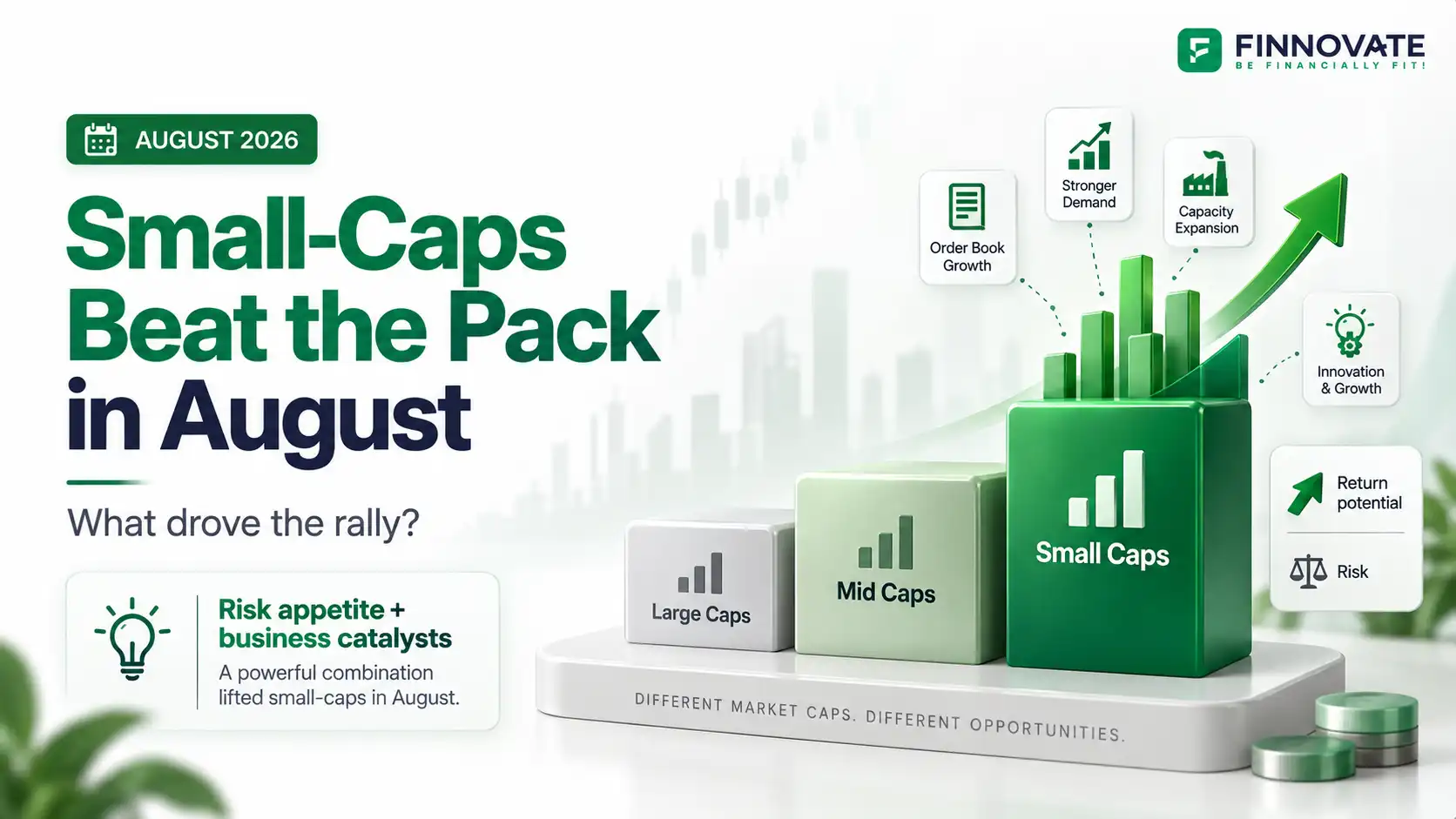
Top Small-Cap Stocks in August 2026: Why Small Caps Outperformed
Nifty Smallcap 100 rose 3.16% in August 2026. See which small-cap stocks led, what drove t...
08 September 2026
Last reviewed: May 2026
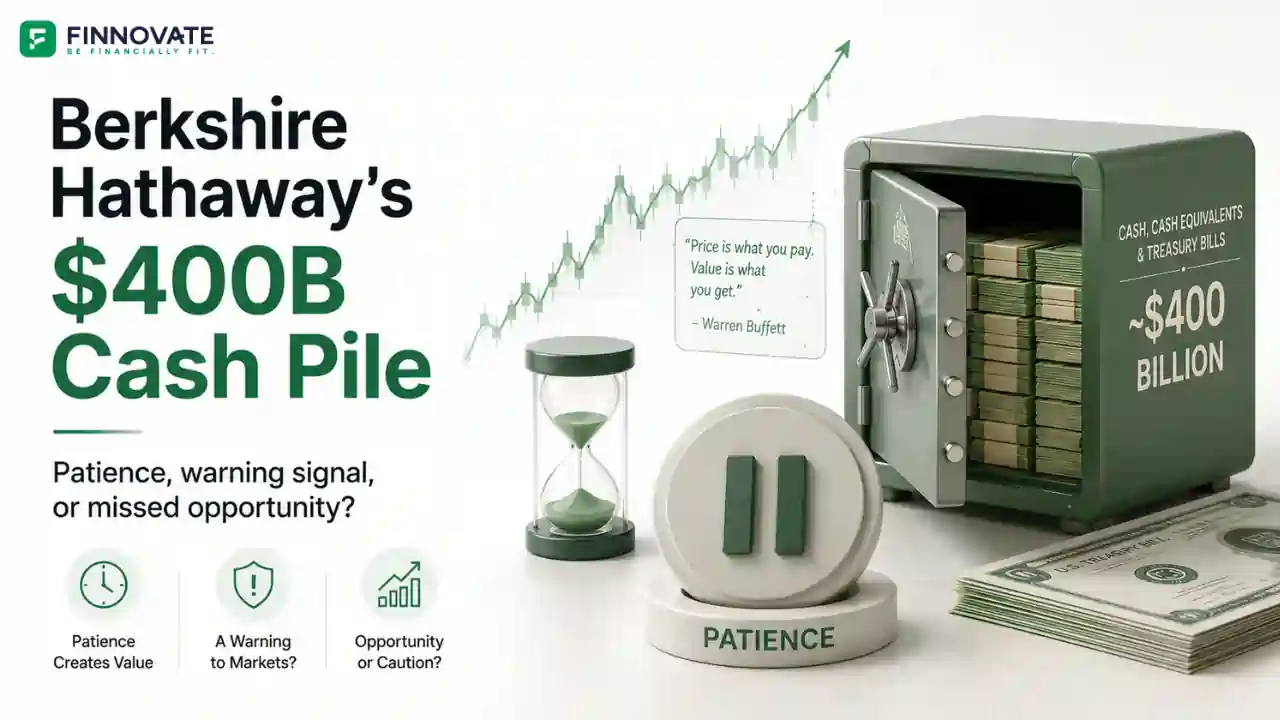
Berkshire Hathaway ended the March 2026 quarter with a record cash, cash equivalents, and short-term Treasury bill position that is now being discussed as a nearly $400 billion cash pile.
That number is not just large. It is a signal.
It tells us three things at the same time: Berkshire has not found enough attractive large deals, it has been reducing equity exposure, and the new Greg Abel era is starting with the same capital discipline that defined Warren Buffett’s leadership.
Reader takeaway: Berkshire is not sitting on cash because it has no options. It is sitting on cash because, by its own standards, most available options are not attractive enough at current prices.
For Indian investors, the point is not to copy Berkshire. A family portfolio cannot behave like a global conglomerate. The point is to understand what this cash pile says about valuation discipline, patience, and the danger of investing only because markets are rising.
Berkshire’s headline cash figure is usually discussed as one number, but it includes cash, cash equivalents, and short-term Treasury bills. That distinction matters because a large part of the money is parked in instruments that earn interest.
| Metric | Figure | Why it matters |
|---|---|---|
| Cash, equivalents, and short-term Treasury bills | Nearly $400 billion | This is Berkshire’s record liquidity position at the start of Greg Abel’s CEO tenure. |
| Operating earnings in Q1 2026 | About $11.35 billion | Operating profit rose nearly 18% year-on-year, helped by stronger insurance and interest income. |
| Equity activity in Q1 2026 | Sold more than it bought | Berkshire remained a net seller of stocks, adding to the caution signal. |
| Large acquisition activity | No major deal since Alleghany in 2022 | At Berkshire’s size, only very large deals can move the needle. |
| CEO transition | Greg Abel’s first full quarter as CEO | The early signal is continuity, not a dramatic change in strategy. |
Berkshire’s cash pile did not grow because of one decision. It grew because of a pattern.
Berkshire remained a net seller of equities in Q1 2026. It bought stocks, but it sold more than it purchased. The direction matters because it shows that the company is still cautious about putting large fresh money into listed equities at current valuations.
Over the last few years, Berkshire also reduced some major equity positions, including Apple and Bank of America. Apple remains one of Berkshire’s largest listed holdings, but the position is far smaller than it was at its peak.
Meaning: Berkshire is not saying markets will crash tomorrow. It is saying that, at today’s prices, it is not finding enough deals that meet its return expectations.
Berkshire is too large for small deals to matter much. A $5 billion or $10 billion acquisition may look huge to most companies, but it barely changes the picture for Berkshire.
That is why the company needs either a very large business at a sensible price or many smaller deals that fit its standards. Since its Alleghany acquisition in 2022, Berkshire has not completed another major acquisition of similar scale.
Higher short-term rates have made Treasury bills useful for Berkshire. The company can keep a large liquidity buffer while still earning interest income.
This is very different from holding idle cash in a zero-interest environment. The cash pile has an opportunity cost, but it is not earning nothing.
When people say Berkshire is “sitting on cash,” it can sound like the money is simply lying unused. That is not accurate.
A large share of Berkshire’s liquidity is parked in short-term US Treasury bills and similar instruments. These are low-risk instruments that can be converted into cash quickly and also generate interest income.
Berkshire gets optionality and income at the same time. Optionality means it can move quickly when a large opportunity appears. Income means the waiting period is not completely wasted.
Still, investors should not ignore the other side. Treasury bill income is useful, but it is not the same as owning a great business that compounds for decades. That is the tension at the heart of Berkshire’s current cash pile.
Berkshire’s patience has protected it from overpaying. But it has also meant sitting out parts of one of the strongest market phases, especially in technology and AI-linked businesses.
This is where the debate becomes interesting.
Buffett’s long-standing rule is simple: do not invest in businesses you cannot understand well enough. This helped Berkshire avoid many bubbles. It also kept Berkshire away from some of the fastest-growing technology winners.
| What Berkshire gained | What Berkshire may have missed |
|---|---|
| Safety, liquidity, and the ability to act during a crisis | Part of the upside from AI, cloud, and high-growth technology stocks |
| Interest income from Treasury bills | Higher long-term compounding if the right equities were bought earlier |
| Lower risk of overpaying at peak valuations | Possible underperformance if markets continue rising without a major correction |
Reader takeaway: Cash gives Berkshire power, but it also creates pressure. The longer markets rise, the harder it becomes to justify holding such a large amount undeployed.
This does not make Berkshire wrong. It means Berkshire has chosen discipline over participation. That choice may look wise during a correction and costly during a bull market.
Greg Abel’s first quarter as CEO did not bring a dramatic change. That itself is the message.
The early signal is continuity. Berkshire is not rushing into deals. It is not trying to look more modern by suddenly chasing every AI or technology theme. It is not breaking itself into parts to please short-term investors.
That is important because many investors wanted to know whether Berkshire would change after Buffett stepped down as CEO. So far, the answer appears to be: not much.
That can be seen in two ways. Supporters will say Abel is preserving Berkshire’s culture. Critics will say the company needs a new capital allocation playbook for a market dominated by asset-light technology businesses.
Both views have merit. The next few years will decide which one becomes stronger.
Berkshire’s cash pile is not a direct instruction to investors. It does not mean everyone should sell equities or hold large cash.
But it does offer three practical lessons.
A rising market can make every decision look smart for some time. Berkshire’s behaviour is a reminder that price still matters. A great company bought at an unreasonable price can still become a poor investment.
Cash is useful when it has a role: emergency needs, near-term goals, tactical flexibility, or a waiting position for better opportunities. Cash becomes a problem when it is held without a plan.
Berkshire can hold hundreds of billions because it is a conglomerate with insurance obligations, acquisition needs, and global capital allocation responsibility. A family portfolio has a different job: funding goals, managing risk, and growing wealth over time.
Berkshire’s cash pile is a global story, but the personal question is simpler: does your own portfolio have the right balance between growth, safety, and liquidity?
A portfolio review can help you check whether your cash, debt, equity, and goal-based investments are working together.
Book a free callBerkshire is holding a large amount of cash, equivalents, and Treasury bills because it has not found enough attractive large investment opportunities at prices that meet its standards. It has also been a net seller of equities in recent quarters.
It is a caution signal, not a direct market prediction. It shows that Berkshire is finding it difficult to deploy very large capital at attractive prices. That does not mean markets must fall immediately.
Yes. A large part of Berkshire’s liquidity is held in short-term Treasury bills and similar instruments, which generate interest income. This makes the waiting period less costly than holding idle cash.
So far, the early signal is continuity. Berkshire continues to focus on financial strength, long-term ownership, and buying only when prices make sense.
The lesson is not to hold huge cash blindly. The lesson is to avoid investing without valuation discipline and to keep enough liquidity for goals, safety, and future opportunities.
Disclaimer: This article is for general information and educational purposes only. It is not investment advice, a recommendation, or an offer to buy or sell any security or financial product. Market data and company figures are based on publicly available information and may change over time. Please consult a SEBI-registered investment adviser or qualified financial professional before making investment decisions. Equity investments are subject to market risks.
No spam. Only new posts, simple explainers, and practical money checklists for busy professionals.
Finnovate is a SEBI-registered financial planning firm that helps professionals bring structure and purpose to their money. Over 3,500+ families have trusted our disciplined process to plan their goals - safely, surely, and swiftly.
Our team constantly tracks market trends, policy changes, and investment opportunities like the ones featured in this Weekly Capsule - to help you make informed, confident financial decisions.
Learn more about our approach and how we work with you:
No comments yet. Start the conversation. What would you add?
No spam. Only new posts, simple explainers, and practical money checklists.
You may also like
Nifty Smallcap 100 rose 3.16% in August 2026. See which small-cap stocks led, what drove t...
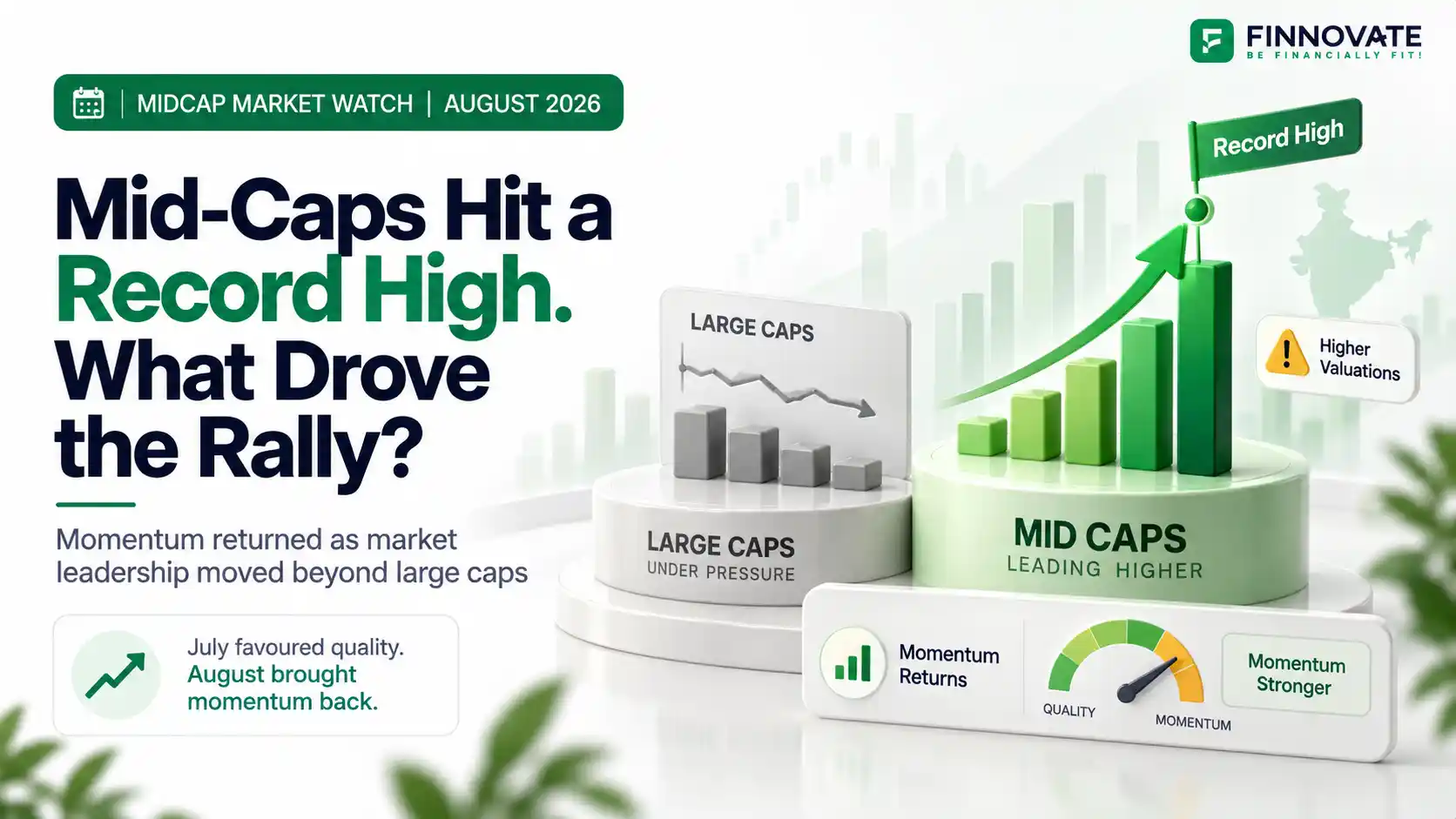
Nifty Midcap 100 rose 2.15% in August 2026. See which mid-cap stocks led the rally, key se...
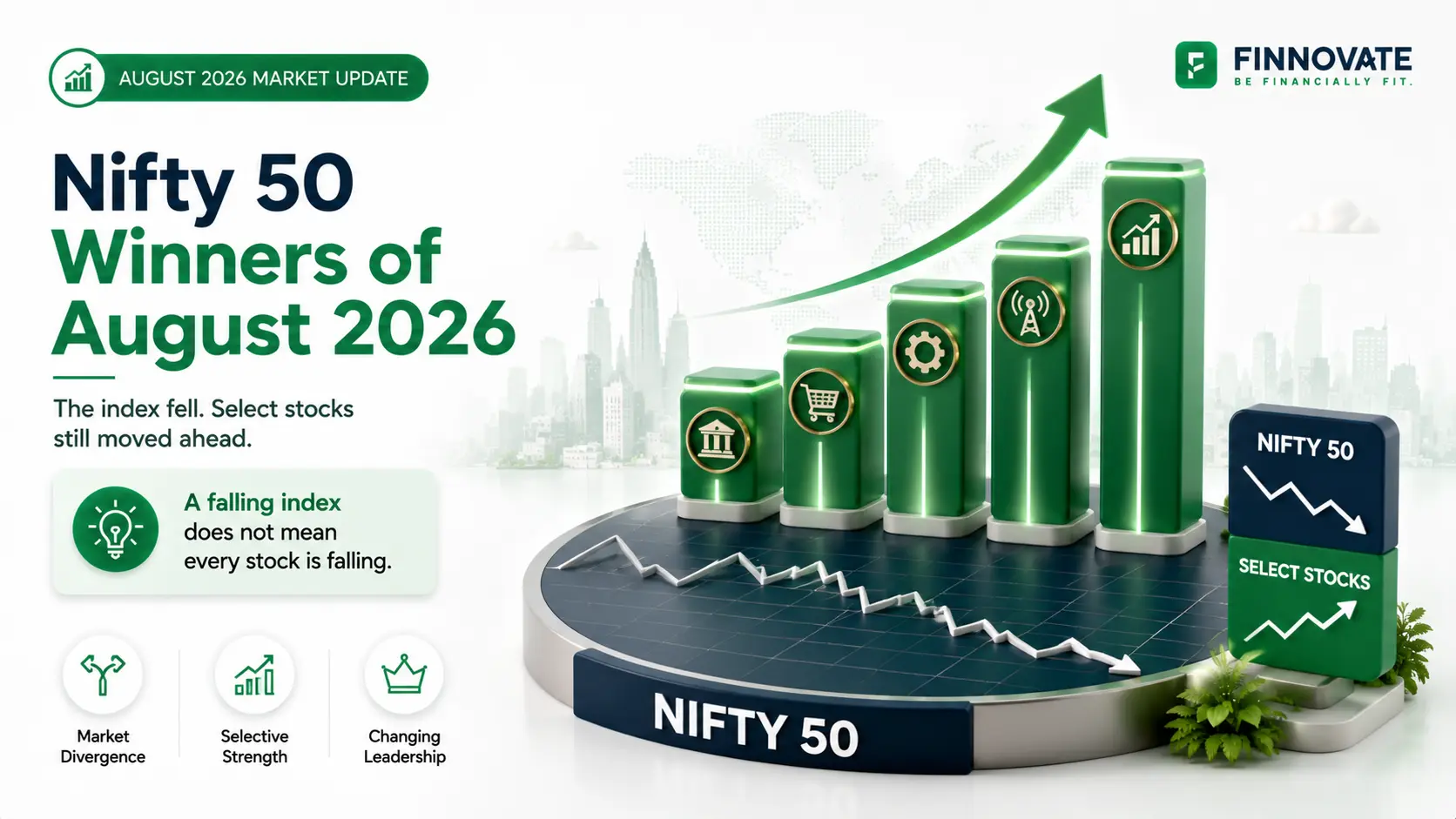
See the best-performing Nifty 50 stocks in August 2026, which sectors led the market, and ...
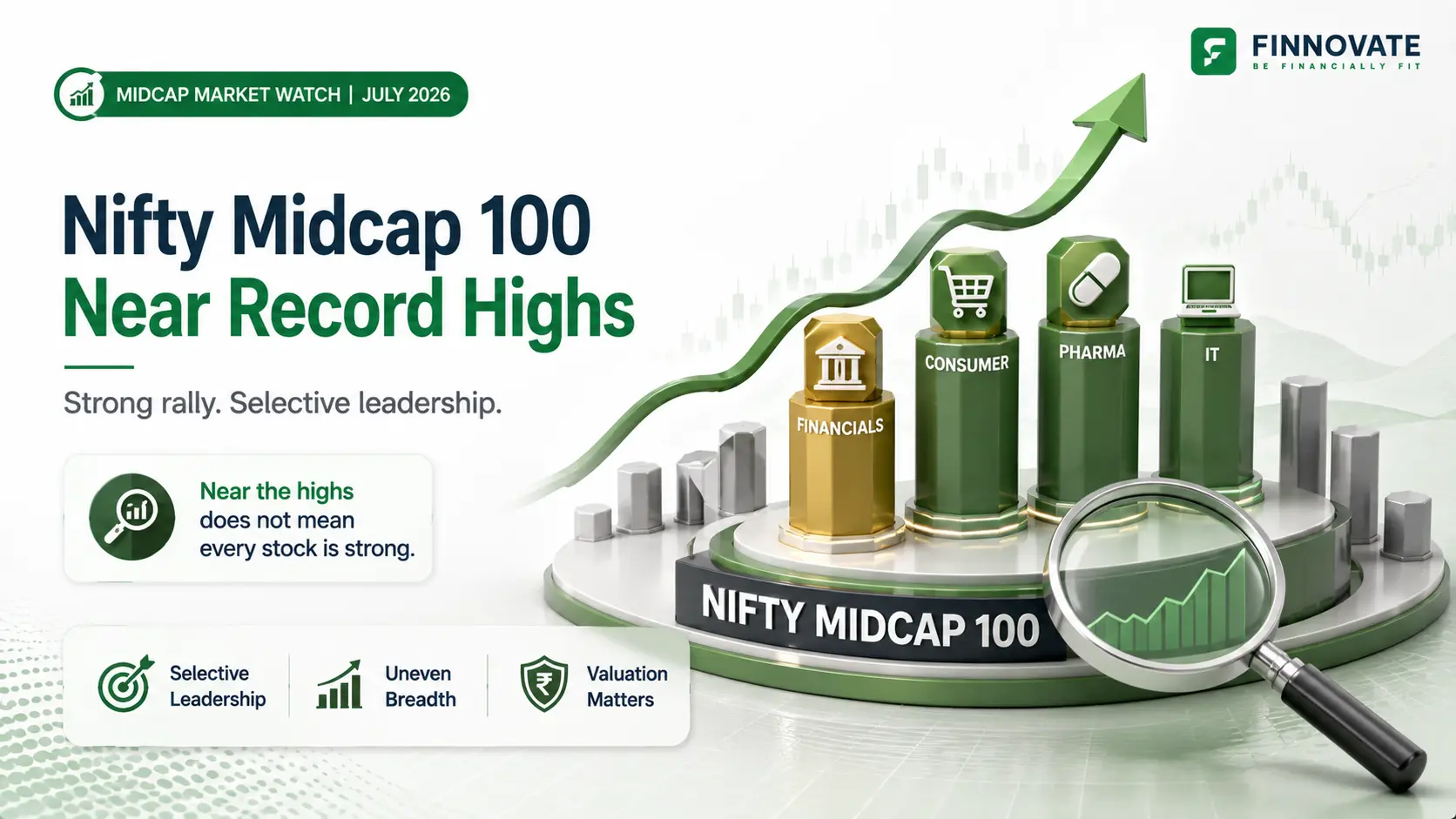
Nifty Midcap 100 gained 1.81% in July 2026 and moved near its yearly high. See the top mid...
Popular now

Learn how to easily download your NSDL CAS Statement in PDF format with our step-by-step g...

Looking for the best financial freedom books? Here’s a handpicked 2026 reading list with...
Learn what SIF investment means in India, SEBI rules, Rs 10 lakh minimum investment, avail...
Clear guide to mutual fund taxation in India for FY 2025–26 after July 2024 changes: equ...