

Nifty Sector Performance September 2026: IPO, Pharma & Metal Lead
Compare 19 sector and thematic indices with Nifty 50 for September 2026, covering monthly ...
01 October 2026
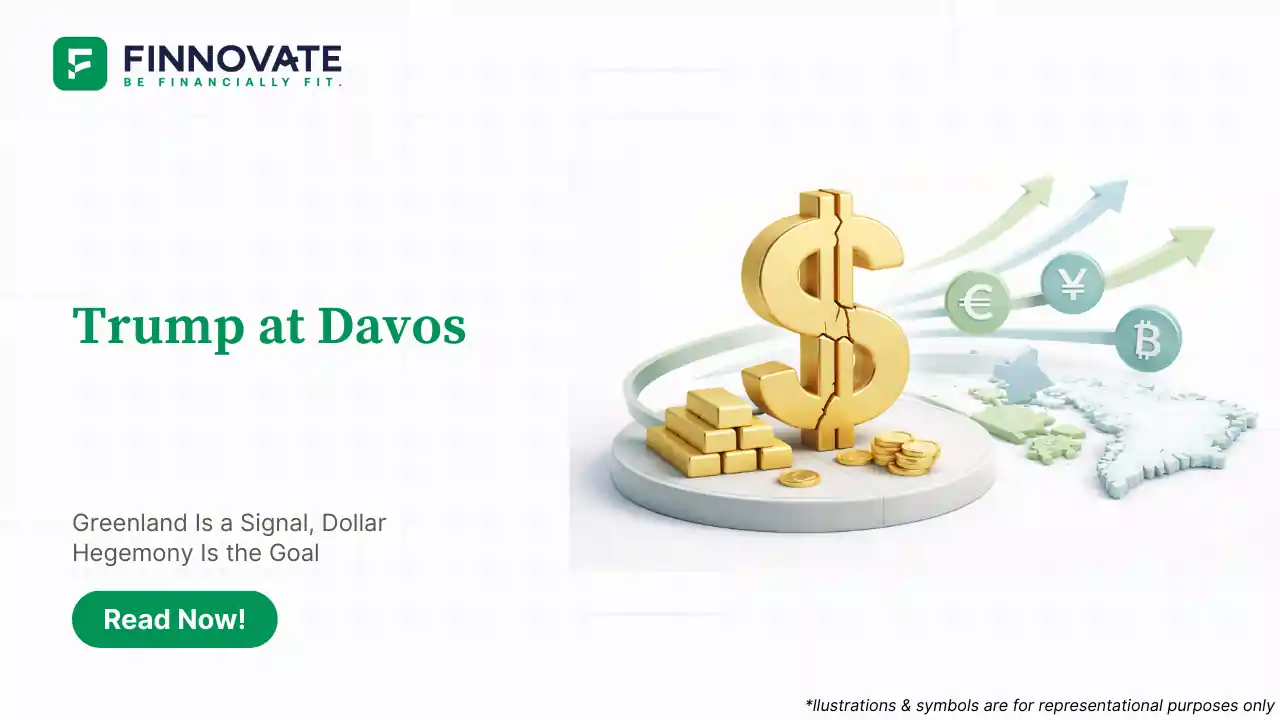
When Donald Trump spoke at Davos, the reaction was swift and sharp. His remarks on Greenland stirred political and diplomatic tensions, prompting parts of Europe to pause discussions on a proposed US–EU trade agreement. At face value, the controversy appeared to be about territorial ambition and geopolitical overreach.
But Greenland is not the real story.
Behind the noise lies a deeper and more consequential concern. Trump’s comments were less about land and more about preserving the global dominance of the US dollar. Greenland, in this context, is a signal rather than the objective.
Davos has traditionally been a platform for consensus-building and economic cooperation. Trump’s remarks broke from that convention. By openly staking interest in Greenland, he disrupted diplomatic norms and forced European leaders into a defensive posture.
The immediate fallout was political. Denmark reiterated its sovereignty over Greenland. European policymakers expressed concern over US unilateralism. Trade discussions were paused, not because of Greenland itself, but because the episode raised broader questions about the direction of US policy.
The intensity of the reaction suggests that Trump’s comments touched a sensitive nerve. The reason lies beyond geography.
Greenland’s importance is often underestimated. For decades, it remained peripheral to global politics. That is no longer the case.
Greenland holds strategic value on several fronts:
Environmental concerns add another layer. Melting ice sheets raise global sea levels, threatening coastal regions worldwide. While this worries climate scientists, it also accelerates the geopolitical relevance of the Arctic.
These factors explain interest in Greenland. They do not explain the timing or the manner of Trump’s intervention.
For Trump, Greenland serves as a geopolitical mask. The real intent is to send clear signals to the global order.
Three messages stand out.
This third message is the core of the strategy.
Dollar hegemony refers to the central role of the US dollar in global finance. It is the primary reserve currency for central banks and the dominant currency for international trade, commodities, and debt markets.
This position gives the US what economists call an “exorbitant privilege”.
As long as the dollar remains central to global finance, US economic influence remains unmatched. Any threat to this position directly affects America’s strategic power.
Trump understands this clearly.
For the first time in decades, there are visible cracks in dollar dominance.
Several trends stand out:
These shifts do not signal the end of the dollar. But they do indicate growing comfort with alternatives. That is precisely what concerns Washington.
A gradual move away from the dollar reduces US leverage over global finance, sanctions, and trade flows.
The US has spent decades acting as the world’s de facto enforcer. Military presence across South Asia, the Middle East, West Asia, and Eastern Europe has come at a massive cost.
US public debt has climbed to around $39 trillion, reflecting years of military spending, stimulus programmes, and structural deficits. This system works as long as global demand for dollars remains strong.
Dollar dominance allows the US to:
Losing this privilege would force difficult fiscal and geopolitical trade-offs. Trump’s approach reflects an attempt to prevent that scenario.
This episode is not about annexing Greenland. Military action or territorial acquisition is not the goal.
The objective is deterrence.
Trump is signalling that:
Greenland, Venezuela, and similar flashpoints serve as reminders of US reach and intent. They reinforce the message that the existing order, with all its imperfections, still rests on American leadership.
The global monetary system is slowly evolving. Alternatives to the dollar are being explored. Gold is regaining prominence. Trade patterns are diversifying.
But transitions of this scale are rarely smooth. The US is unlikely to step aside quietly. Dollar dominance underpins its economic and strategic power, and preserving it remains a top priority.
Greenland may dominate headlines, but the real battle is being fought in balance sheets, reserve allocations, and currency markets.
Disclaimer: This article is for general information and educational purposes only. It does not constitute investment advice, a recommendation, or an offer to buy or sell any securities or financial products. Please consult a qualified professional before making any financial decisions.
No spam. Only new posts, simple explainers, and practical money checklists for busy professionals.
Finnovate is a SEBI-registered financial planning firm that helps professionals bring structure and purpose to their money. Over 3,500+ families have trusted our disciplined process to plan their goals - safely, surely, and swiftly.
Our team constantly tracks market trends, policy changes, and investment opportunities like the ones featured in this Weekly Capsule - to help you make informed, confident financial decisions.
Learn more about our approach and how we work with you:
No comments yet. Start the conversation. What would you add?
No spam. Only new posts, simple explainers, and practical money checklists.
You may also like
Compare 19 sector and thematic indices with Nifty 50 for September 2026, covering monthly ...

Understand the Growpital case, SEBI’s refund order, the LLP investment structure and wha...
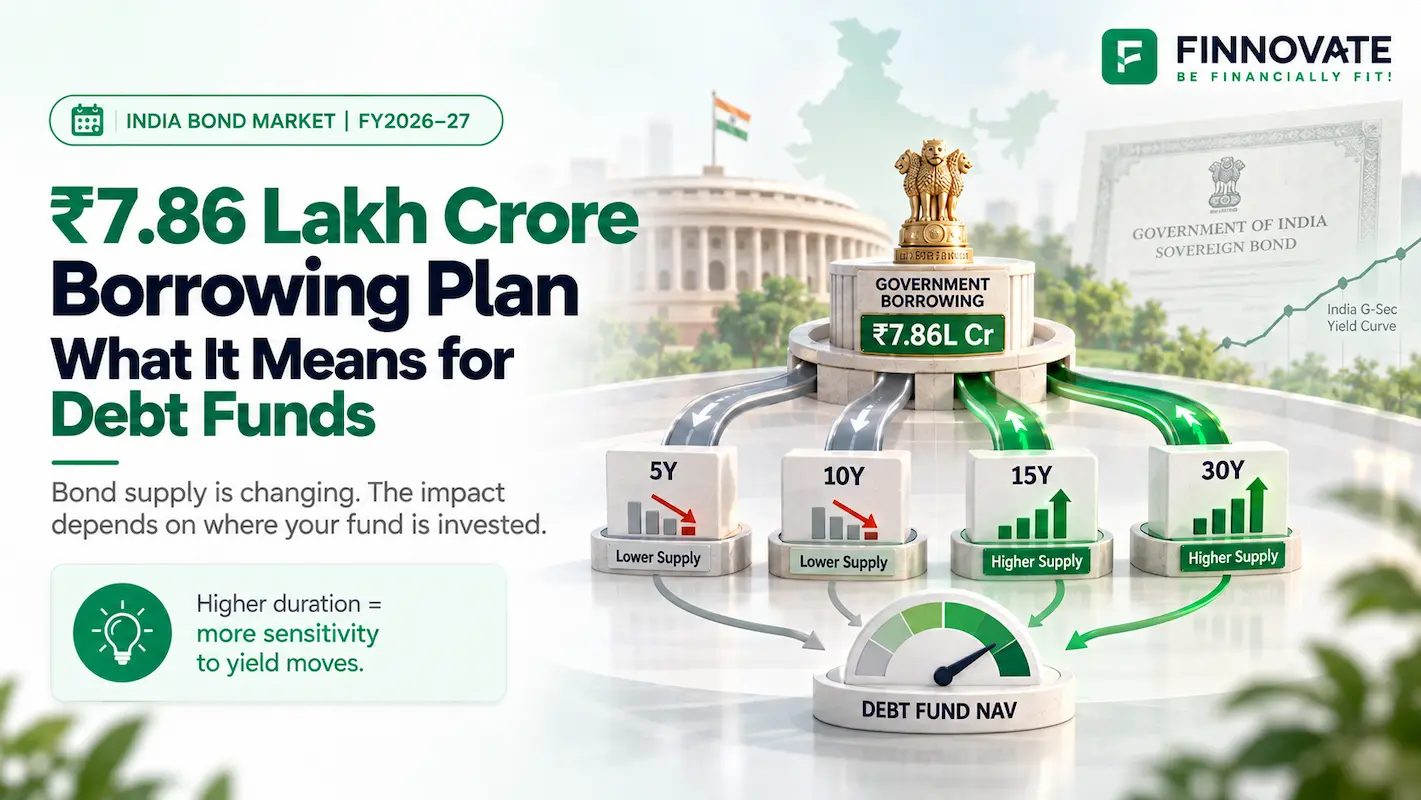
India plans to borrow ₹7.86 lakh crore in the second half of FY2026–27. Learn how the ...

Proposed EU scrap export curbs could affect India’s metal supply and manufacturing costs...
Popular now

Learn how to easily download your NSDL CAS Statement in PDF format with our step-by-step g...

Looking for the best financial freedom books? Here’s a handpicked 2026 reading list with...
Learn what SIF investment means in India, SEBI rules, Rs 10 lakh minimum investment, avail...

Clear guide to mutual fund taxation in India for FY 2025–26 after July 2024 changes: equ...