
NSE IPO Review 2026: Price, GMP, Financials, Valuation & Risks
After a 10-year wait, the NSE IPO is finally here. Get a complete review of the National S...
16 September 2026

When it comes to investing in Initial Public Offerings (IPOs), it's important to know that not all IPOs are the same. Broadly, IPOs are categorized into two types: SMEs (Small and Medium Enterprises) IPOs and Mainboard IPOs. Each serves a different purpose and caters to different types of companies. If you're new to the world of investing, understanding these differences can help you make more informed decisions.
Before diving into the differences, let's briefly understand what an IPO is. An Initial Public Offering (IPO) is when a company first sells its shares to the public. This process helps the company raise capital to expand its business, pay off debts, or fund new projects.
An SME IPO is designed for small and medium-sized enterprises that want to raise capital but may not meet the stricter criteria required for a Mainboard IPO. SME IPOs are listed on special platforms like the BSE SME and NSE Emerge, which are specifically tailored to accommodate smaller businesses.
A Mainboard IPO is for larger, more established companies that meet stricter regulatory requirements. These IPOs are listed on the primary stock exchanges like the BSE and NSE.
To better understand the distinctions between these two types of IPOs, here's a table summarizing the key differences:
| Feature | SME IPO | Mainboard IPO |
|---|---|---|
| Target Companies | Small and Medium Enterprises | Larger, more established companies |
| Listing Platform | BSE SME, NSE Emerge | BSE, NSE |
| Financial Requirements | Lower (Revenue, Profit, Net Worth) | Higher (Revenue, Profit, Net Worth) |
| Regulatory Requirements | Less stringent | Stricter |
| Market Liquidity | Lower | Higher |
| Risk Level | Higher | Moderate |
| Investor Base | Generally retail investors | Institutional and retail investors |
| Investment Amount | Typically lower | Typically higher |
| Post-IPO Compliance | Less complex | More complex |
Both SME and Mainboard IPOs offer unique investment opportunities, but they come with different levels of risk and reward. While SME IPOs might appeal to those looking for higher returns with a higher risk, Mainboard IPOs are often considered safer but with potentially lower returns. Understanding these differences can help you align your investment strategy with your financial goals.
By knowing which type of IPO suits your risk appetite and investment horizon, you can make more informed decisions and potentially maximize your returns.
No spam. Only new posts, simple explainers, and practical money checklists for busy professionals.
Finnovate is a SEBI-registered financial planning firm that helps professionals bring structure and purpose to their money. Over 3,500+ families have trusted our disciplined process to plan their goals - safely, surely, and swiftly.
Our team constantly tracks market trends, policy changes, and investment opportunities like the ones featured in this Weekly Capsule - to help you make informed, confident financial decisions.
Learn more about our approach and how we work with you:
No comments yet. Start the conversation. What would you add?
No spam. Only new posts, simple explainers, and practical money checklists.
You may also like
After a 10-year wait, the NSE IPO is finally here. Get a complete review of the National S...

NSE has filed for its long-awaited IPO. Before applying, understand its valuation, F&O dep...
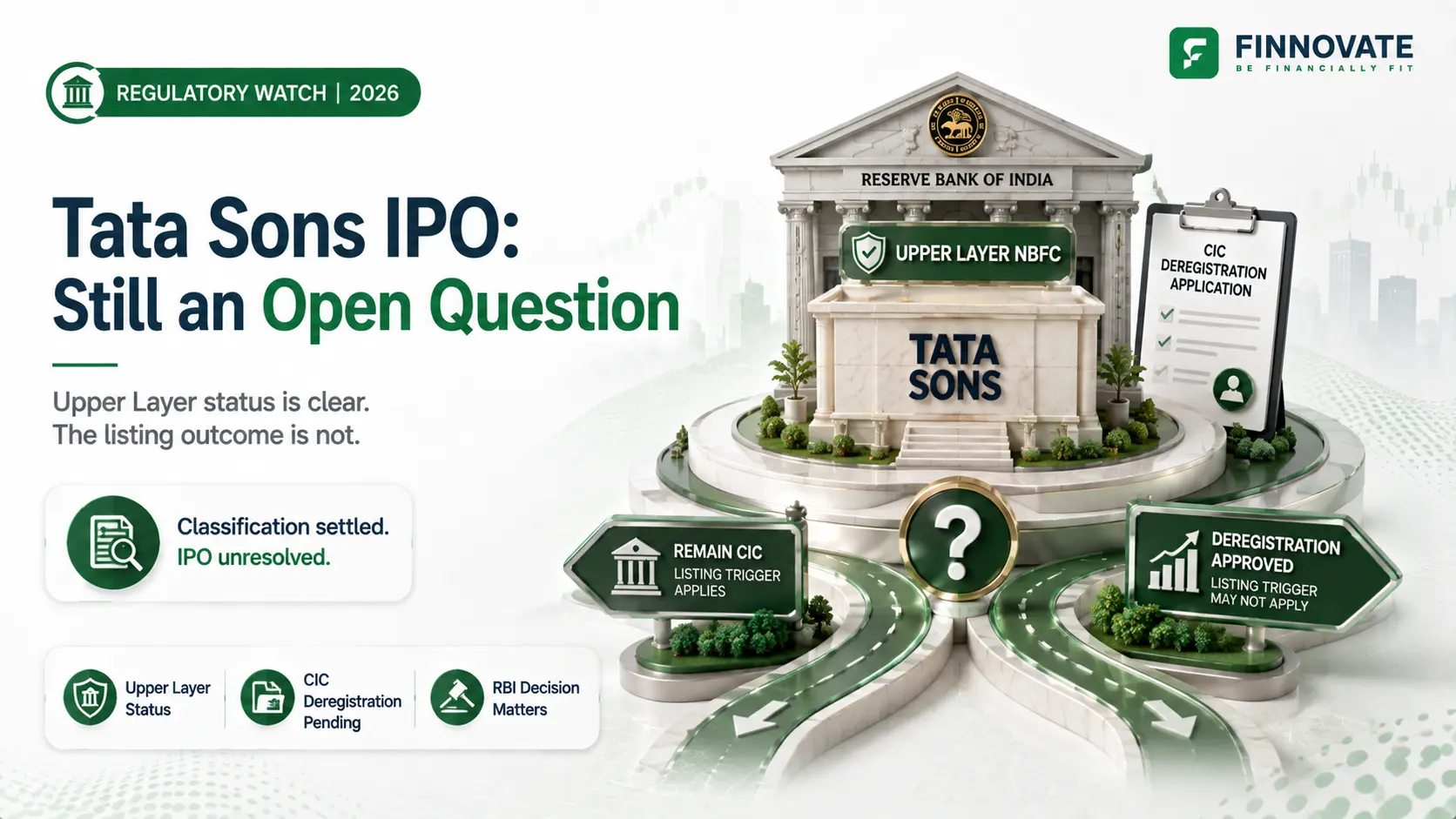
Tata Sons remains an Upper Layer NBFC in 2026. Understand RBI listing rules, CIC deregistr...
SBI Funds Management IPO: RHP-based review of price band, GMP, financials & risks, and why...
Popular now
Learn how to easily download your NSDL CAS Statement in PDF format with our step-by-step g...

Looking for the best financial freedom books? Here’s a handpicked 2026 reading list with...
Learn what SIF investment means in India, SEBI rules, Rs 10 lakh minimum investment, avail...
Clear guide to mutual fund taxation in India for FY 2025–26 after July 2024 changes: equ...