

IRDAI Insurance Reforms 2026: Proposed Commission Caps
Explore IRDAI’s proposed insurance commission caps, existing payouts and sales reforms, ...
25 September 2026

The life insurance industry isn't just grappling with changes in India — it's a global phenomenon. In the United States, life insurance ownership dropped from 63% in 2011 to just 50% by 2024 (Source: LIMRA Life Insurance Barometer Study). Similarly, in India, Life Insurance Corporation (LIC) has witnessed slowing New Business Premium (NBP) growth, with private players also experiencing headwinds.
What's driving this shift?
The introduction of India's New Tax Regime (NTR) in 2020 marked a pivotal turning point. Under NTR, taxpayers could opt for lower tax rates by forgoing exemptions like Section 80C — historically a key selling point for life insurance. As millions, especially from middle and lower-income groups, transitioned to NTR, the incentive to buy insurance merely for tax savings diminished.
For many, the NTR simplified taxes and improved cash flows, making life insurance purchases based on tax breaks seem unnecessary and cumbersome.
For decades, life insurers, especially LIC, heavily relied on tax-driven selling. However, life insurance is fundamentally about protecting your loved ones from financial hardship in your absence — not just about saving taxes.
This necessary shift in mindset won't happen overnight. However, it's crucial for life insurers to reframe their communication:
Life insurance is about life, not taxes.
Building awareness around this emotional and practical core value will determine which companies thrive in the next decade.
Two major trends are reshaping life insurance distribution:
1. Life insurance must be positioned as a core financial planning tool: It should integrate seamlessly into a person’s overall wealth and risk management strategy, rather than being sold as a stand-alone tax-saving instrument.
2. Distributors and Financial Advisors will need to become the key value creators: This calls for higher investment in distributor training, better client retention strategies, and rewarding advisors based on the quality of advice rather than just volume of policies sold.
When advisors add more strategic value to customers' lives, the industry must ensure they are compensated accordingly.
Artificial Intelligence (AI) is no longer optional — it's essential. Here’s how AI can revolutionize life insurance:
Customer Prospecting: Use AI-driven tools to identify new customer segments based on lifestyle data, social media trends, and demographic shifts.
Product Customization: AI can mine massive datasets to personalize policy offerings based on health, habits, and life stage.
Risk Assessment: Real-time monitoring of health data and external factors can allow insurers to dynamically adjust underwriting standards.
Claims Processing: Automated claim verification through AI can reduce fraud and speed up settlements.
Global insurers like MetLife and Prudential are already investing heavily in AI platforms, and Indian insurers must accelerate this transition to stay competitive.
The old model of insurance selling is rapidly becoming obsolete. The future belongs to agile, tech-savvy, customer-centric insurers.
No spam. Only new posts, simple explainers, and practical money checklists for busy professionals.
Finnovate is a SEBI-registered financial planning firm that helps professionals bring structure and purpose to their money. Over 3,500+ families have trusted our disciplined process to plan their goals - safely, surely, and swiftly.
Our team constantly tracks market trends, policy changes, and investment opportunities like the ones featured in this Weekly Capsule - to help you make informed, confident financial decisions.
Learn more about our approach and how we work with you:
No comments yet. Start the conversation. What would you add?
No spam. Only new posts, simple explainers, and practical money checklists.
You may also like
Explore IRDAI’s proposed insurance commission caps, existing payouts and sales reforms, ...

Indian banks earned over ₹20,000 crore distributing insurance in FY26. HDFC Bank led at ...
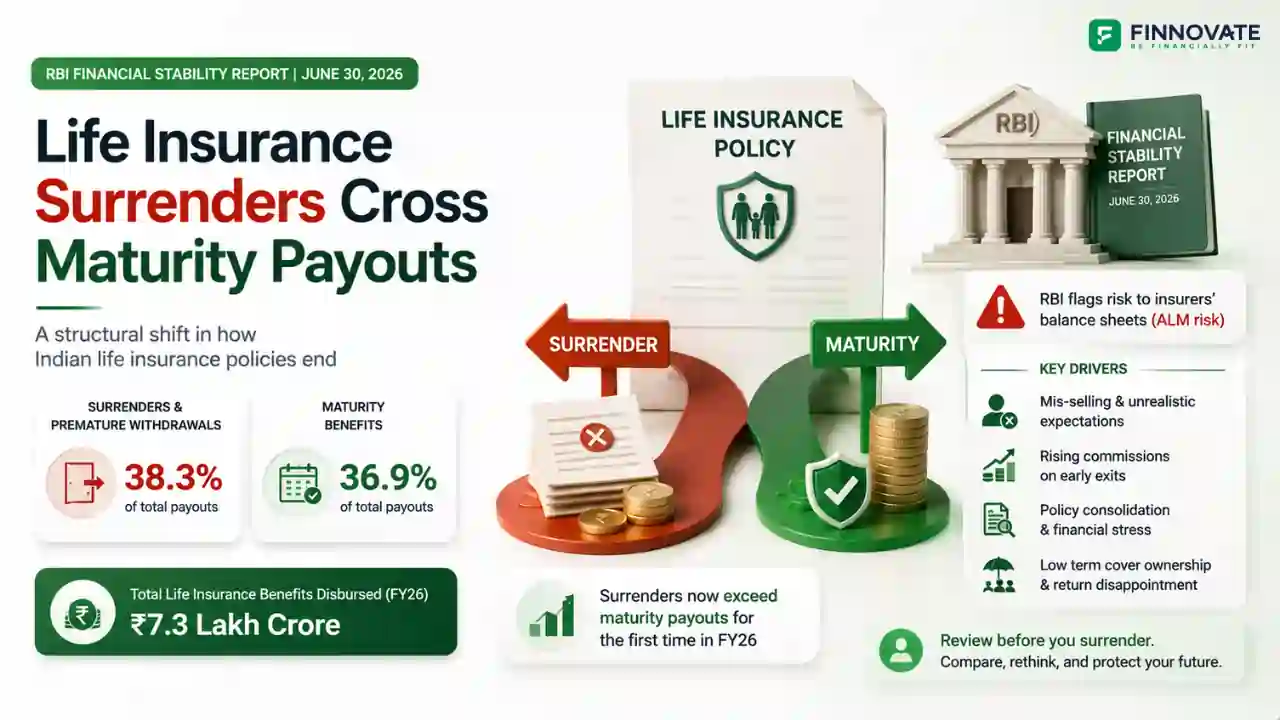
Surrenders made up 38.3% of life insurance payouts in FY26, ahead of maturity benefits at ...

India's 2025 insurance law passed by Parliament didn't extend open architecture to individ...
Popular now
Learn how to easily download your NSDL CAS Statement in PDF format with our step-by-step g...

Looking for the best financial freedom books? Here’s a handpicked 2026 reading list with...
Learn what SIF investment means in India, SEBI rules, Rs 10 lakh minimum investment, avail...

Clear guide to mutual fund taxation in India for FY 2025–26 after July 2024 changes: equ...