

The Great Economic Decoupling of 2026: Oil, AI & India
Rising oil prices and booming AI investment are shaping an uneven global economy in 2026. ...
24 October 2026
India’s GST Council has approved a simpler rate structure - two primary slabs of 5% and 18%, plus a special 40% band for select demerit/luxury items. For households, invoices get simpler and several items are expected to become cheaper; for businesses, it’s time to remap rates, SKUs, and software before the rollout.
Put simply, India is moving from the old (5% / 12% / 18% / 28%) grid to a cleaner structure with two core rates - 5% and 18% - and a 40% band reserved for a narrow set of demerit goods and services. The policy intent is straightforward: simplify rate disputes, ease compliance, and support consumption.
| Structure | Slabs |
|---|---|
| Old | Nil, 5%, 12%, 18%, 28% (with cess for some) |
| New | Nil, 5%, 18%, 40% (special demerit) |
What to do now (businesses): update POS/ERP tax masters, remap HSN-to-rate, refresh e-invoice logic, revise MRPs and quotations/AMCs, and train staff on the new totals at checkout. Watch for CBIC notifications that codify item-wise mappings and any staggered dates.
Illustrative mapping from your source article; final item-wise confirmation will follow CBIC notifications.
| Items | Previous slab | New slab | Notes |
|---|---|---|---|
| UHT milk; Indian breads | 5% | Nil | Essential Dairy Products |
| Condensed milk; butter; ghee; cheese | 12% | 5% | Dairy products |
| Hair oil; toothpaste; toilet soap; toothbrush; shaving cream | 18% | 5% | Personal care staples |
| Almonds; cashews; pistachios; hazelnuts; dates | 12% | 5% | Edible nuts & dried fruits |
| Refined sugar; syrups; toffees; candies | 12% | 5% | Confectionery (non-chocolate) |
| Vegetable oils; animal fats; spreads; sausages; meat/fish products; malt-based foods | 12% | 5% | Processed foods |
| Namkeens; bhujia; mixtures; other savoury snacks | 12% | 5% | Packaged snacks |
| Packaged drinking water (no added sugar/flavour) | 18% | 5% | Unsweetened waters only |
| Items | Previous slab | New slab | Notes |
|---|---|---|---|
| Utensils; feeding bottles; baby napkins/clinical diapers; sewing machines & parts | 12% | 5% | Household & baby |
| Items | Previous slab | New slab | Notes |
|---|---|---|---|
| Fertilisers | 12%–18% | 5% | Uniform lower rate |
| Tractor tyres & parts | 18% | 5% | Agri inputs |
| Tractors | 12% | 5% | Finished equipment |
| Bio-pesticides; micronutrients; drip irrigation; sprinklers; agri machines (soil prep/harvesting/threshing) | 12% | 5% | Farm technology |
| Items | Previous slab | New slab | Notes |
|---|---|---|---|
| Thermometers | 18% | 5% | Medical devices |
| Medical oxygen; diagnostic kits & reagents; glucometers & strips; corrective spectacles | 12% | 5% | Healthcare ecosystem |
| Insurance (individual life & health) | 18% | Nil | Premiums exempt |
| Education goods (maps, charts, globes, pencils, sharpeners, crayons/pastels, notebooks, erasers) | 12% | Nil | Learning materials |
| Items | Previous slab | New slab | Notes |
|---|---|---|---|
| Air conditioners; TVs > 32"; monitors; projectors; dishwashers | 28% | 18% | Durables rate cut |
| Items | Previous slab | New slab | Notes |
|---|---|---|---|
| Petrol & petrol-hybrid cars; LPG/CNG cars (≤ 1,200 cc; ≤ 4,000 mm) | 28% | 18% | Model-wise cess may apply |
| Items | Previous slab | New slab | Notes |
|---|---|---|---|
| Renewable energy devices; construction materials; sports goods; toys; leather; wood items; handicrafts | 12% | 5% | Broad shift to merit rate |
| Items | Previous slab / basis | New slab / basis | Notes |
|---|---|---|---|
| Sweetened or flavoured drinks (incl. aerated soft drinks) | 28% | 40% | Demerit band |
| Pan masala; gutkha; cigarettes; chewing tobacco; zarda; raw tobacco; bidis | High GST + cess on transaction value | High GST/cess with RSP-based valuation | Stricter compliance; burden continues until cess loans are cleared |

Illustrative only - final math depends on item classification and the official notification.
Two core rates - 5% and 18% - plus a 40% demerit band. Essentials remain Nil.
The rollout begins 22 September 2025 for services and most goods; some demerit items may transition later via notification.
Many categories shift to 18%, while demerit items are addressed via the 40% band or transitional notifications.
Where rates are reduced or exemptions apply, savings should reflect from the effective date or policy renewal. Check your insurer’s communication and the final notification.
Follow CBIC guidance on ITC and pricing; businesses should update ERP, re-price SKUs, and pass legitimate reductions to customers.
Disclaimer: This article is for educational purposes only and is not tax or legal advice. Please refer to official CBIC notifications and consult a Chartered Accountant for your specific case.
No spam. Only new posts, simple explainers, and practical money checklists for busy professionals.
Finnovate is a SEBI-registered financial planning firm that helps professionals bring structure and purpose to their money. Over 3,500+ families have trusted our disciplined process to plan their goals - safely, surely, and swiftly.
Our team constantly tracks market trends, policy changes, and investment opportunities like the ones featured in this Weekly Capsule - to help you make informed, confident financial decisions.
Learn more about our approach and how we work with you:
No comments yet. Start the conversation. What would you add?
No spam. Only new posts, simple explainers, and practical money checklists.
You may also like
Rising oil prices and booming AI investment are shaping an uneven global economy in 2026. ...
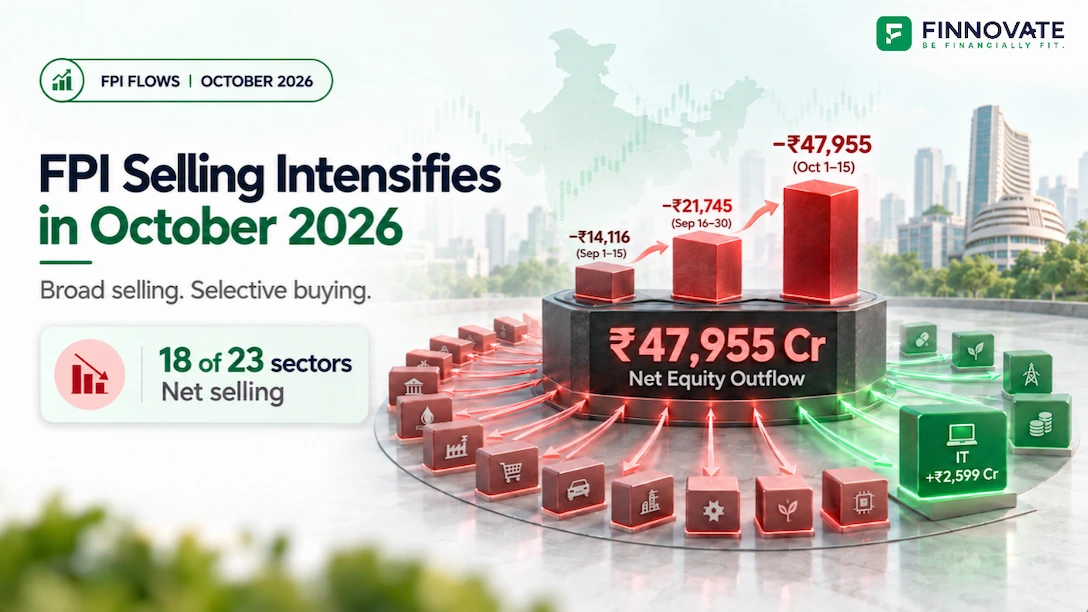
Explore FPI equity flows for October First Half, 2026: ₹47,955 crore in net outflows, th...
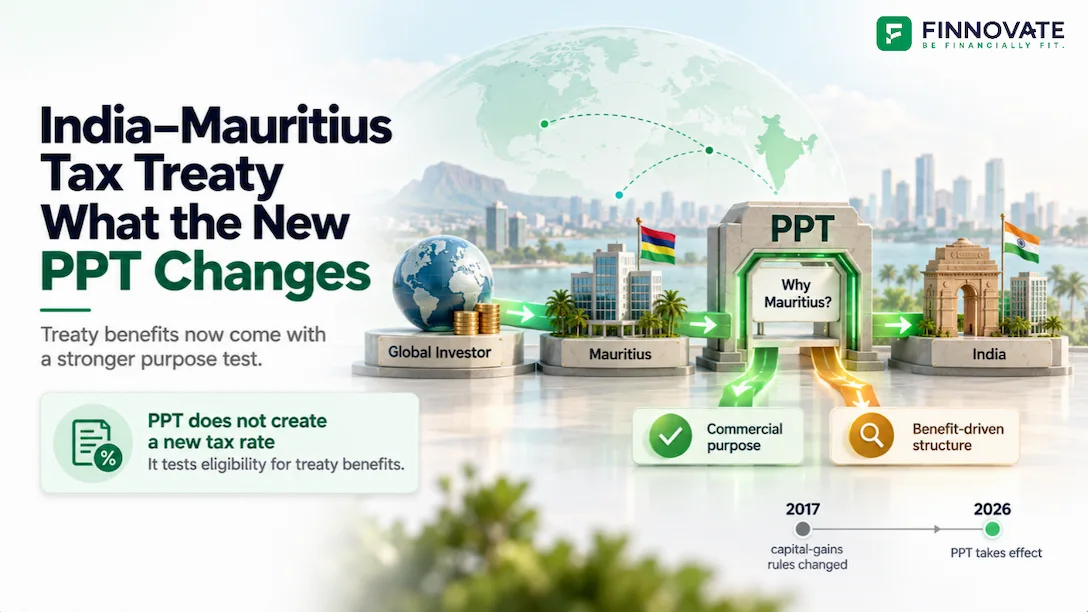
Understand the India–Mauritius tax treaty’s Principal Purpose Test, its August 2026 ef...

Explore India’s AI hardware opportunity through the proposed Adani–Jabil venture, from...
Popular now
Learn how to easily download your NSDL CAS Statement in PDF format with our step-by-step g...

Looking for the best financial freedom books? Here’s a handpicked 2026 reading list with...
Learn what SIF investment means in India, SEBI rules, Rs 10 lakh minimum investment, avail...
Clear guide to mutual fund taxation in India for FY 2025–26 after July 2024 changes: equ...