

The Great Economic Decoupling of 2026: Oil, AI & India
Rising oil prices and booming AI investment are shaping an uneven global economy in 2026. ...
24 October 2026
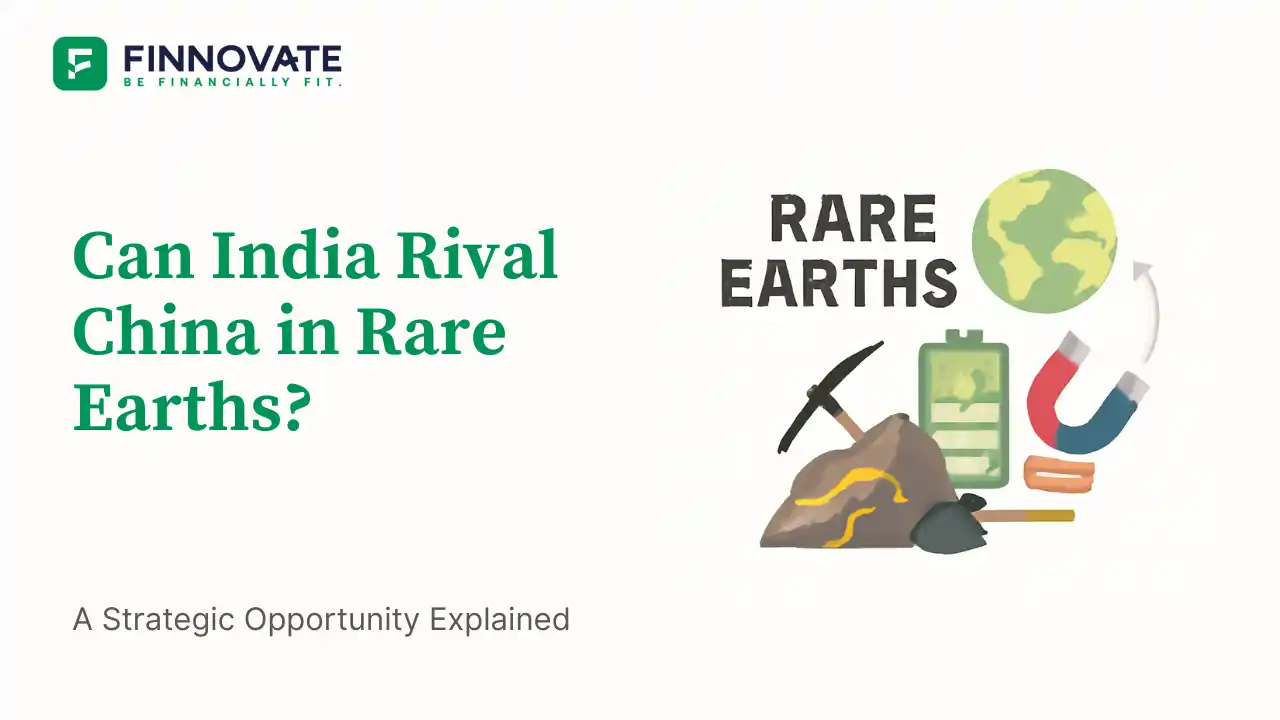
Rare earths might sound exotic, but they are anything but rare in their importance. From electric vehicles (EVs) to fighter jets, they’re a critical component of modern tech and defense infrastructure. China dominates this space but with Beijing now curbing global supply, can India rise to the occasion?
Currently, China produces around 2,70,000 metric tonnes of rare earths annually. In contrast, India’s output stands at just 2,900 metric tonnes - barely 1% of China’s volume. China not only controls over 70% of global production, but also commands nearly 90% of processing capacity, especially in rare earth magnets that power EV motors and precision defense tools.
Over the past decade, China has systematically secured mining rights across Asia, Africa, and Latin America. It now sits at the epicenter of a supply chain the world depends on.
Beijing’s recent decision to limit exports is officially aimed at curbing illegal mining. But the strategic intent seems clear: maintain leverage over global supply and delay other nations from building alternate sources. It's a reminder of China’s playbook during the COVID-19 pandemic when supply chain constraints led to global inflation surges.
With this move, the global auto and defense sectors - already under cost pressure - face another challenge: sourcing critical inputs elsewhere in a short time.
So, where does India stand? On paper, India's output is minuscule. But the true potential lies beneath its coasts. India holds around 35% of global beach sand mineral reserves, a key source of rare earths. Until now, there was little incentive to scale up domestic production due to China's dominance.
Now, the game is changing. India has recognized this moment as an opportunity - not just for self-sufficiency, but also to become a credible alternative in the global supply chain. The government is offering new incentives and encouraging private sector participation in both mining and processing.
Historically, rare earth mining in India has been under Indian Rare Earths Ltd, a government entity formed in 1950. But output remained modest, and R&D investment was limited. That’s starting to shift. Recent policy changes aim to:
With a stronger infrastructure push and clearer pricing mechanisms, India could finally unlock value from its vast reserves.
India still has a long road to travel. The gap in scale, technology, and processing capacity is huge. But the seeds have been planted.
If executed well, India’s rare earth push can:
The rare earth story is no longer just about geology - it’s about strategy, execution, and global positioning. For India, it’s a test of readiness to step up when the world needs alternatives.
Explore more on India’s role in global trade, commodities, and economic transformation in our Learning Hub.
Disclaimer: This article is intended for informational purposes only. It does not constitute investment, policy, or strategic advice. Readers should conduct their own research or consult qualified professionals before acting on the information presented.
No spam. Only new posts, simple explainers, and practical money checklists for busy professionals.
Finnovate is a SEBI-registered financial planning firm that helps professionals bring structure and purpose to their money. Over 3,500+ families have trusted our disciplined process to plan their goals - safely, surely, and swiftly.
Our team constantly tracks market trends, policy changes, and investment opportunities like the ones featured in this Weekly Capsule - to help you make informed, confident financial decisions.
Learn more about our approach and how we work with you:
No comments yet. Start the conversation. What would you add?
No spam. Only new posts, simple explainers, and practical money checklists.
You may also like
Rising oil prices and booming AI investment are shaping an uneven global economy in 2026. ...

Explore FPI equity flows for October First Half, 2026: ₹47,955 crore in net outflows, th...
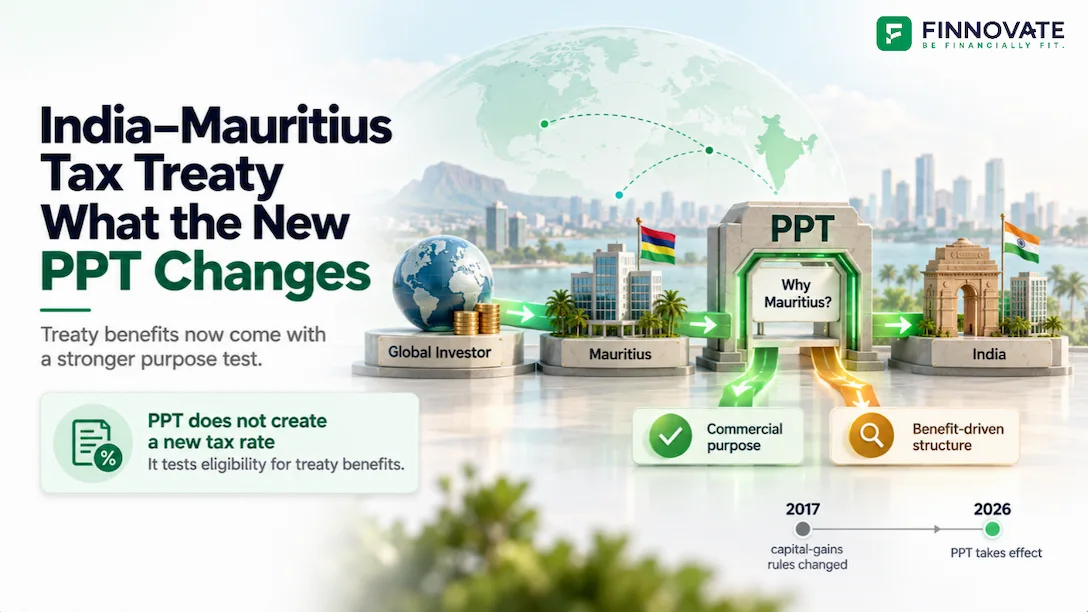
Understand the India–Mauritius tax treaty’s Principal Purpose Test, its August 2026 ef...

Explore India’s AI hardware opportunity through the proposed Adani–Jabil venture, from...
Popular now

Learn how to easily download your NSDL CAS Statement in PDF format with our step-by-step g...

Looking for the best financial freedom books? Here’s a handpicked 2026 reading list with...
Learn what SIF investment means in India, SEBI rules, Rs 10 lakh minimum investment, avail...

Clear guide to mutual fund taxation in India for FY 2025–26 after July 2024 changes: equ...