

FPI Flows First Half October 2026: ₹47,955 Crore Outflow
Explore FPI equity flows for October First Half, 2026: ₹47,955 crore in net outflows, th...
23 October 2026
India’s current account deficit for FY25 has turned out to be significantly lower than market expectations, aided by a strong services surplus, higher remittances, and resilient trade adjustments.
The current account is a key component of a country's balance of payments. It reflects the net flow of goods, services, income, and transfer payments between residents of a country and the rest of the world.
For India, the current account typically shows a deficit, largely due to heavy crude oil imports, which constitute over 85% of our oil needs.
CAD is calculated using:
A lower CAD is a positive sign. It supports the rupee, improves investor sentiment, and helps maintain better sovereign credit ratings.
| Pressure on Current Account | Fiscal FY25 | Fiscal FY24 | Boost to Current Account | Fiscal FY25 | Fiscal FY24 |
|---|---|---|---|---|---|
| Trade Deficit | ($287.20 bn) | ($244.90 bn) | Services Surplus | +$188.80 bn | +$162.80 bn |
| Primary A/C – Interest | ($48.40 bn) | ($49.70 bn) | Secondary Income | +$123.50 bn | +$105.80 bn |
| Negative Thrust on CA | ($335.60 bn) | ($294.60 bn) | Positive Thrust on CA | +$312.30 bn | +$268.60 bn |
| Current Account Surplus / (Deficit) | ($23.30 bn) | ($26.60 bn) | |||
Data Source: RBI
Despite posting a current account deficit (CAD) of $23.3 billion for the full fiscal year, India reported a surplus of $13.5 billion in Q4FY25. This brought the full-year CAD down to just 0.6% of GDP, far below most economists’ fears of 1.5% or higher.
A closer look shows that India’s services surplus covered about 66% of the merchandise trade deficit, thanks to continued strength in software exports, BPO services, accounting, audit, legal services, and the rise of global capability centres (GCCs) based in India.
Here are four major factors that helped moderate the CAD:
A CAD of just 0.6% of GDP sends a strong signal of economic stability.
If this trend continues, it could also have positive implications on sovereign ratings and borrowing costs.
India’s ability to manage its external account effectively in a turbulent global environment is commendable. The Q4FY25 surplus and a full-year CAD well below expectations signal that India’s external fundamentals are more stable than many had anticipated.
Disclaimer: This article is for informational purposes only and should not be construed as financial advice. Please consult a qualified expert before making any financial decisions.
No spam. Only new posts, simple explainers, and practical money checklists for busy professionals.
Finnovate is a SEBI-registered financial planning firm that helps professionals bring structure and purpose to their money. Over 3,500+ families have trusted our disciplined process to plan their goals - safely, surely, and swiftly.
Our team constantly tracks market trends, policy changes, and investment opportunities like the ones featured in this Weekly Capsule - to help you make informed, confident financial decisions.
Learn more about our approach and how we work with you:
No comments yet. Start the conversation. What would you add?
No spam. Only new posts, simple explainers, and practical money checklists.
You may also like
Explore FPI equity flows for October First Half, 2026: ₹47,955 crore in net outflows, th...

Understand the India–Mauritius tax treaty’s Principal Purpose Test, its August 2026 ef...

Explore India’s AI hardware opportunity through the proposed Adani–Jabil venture, from...
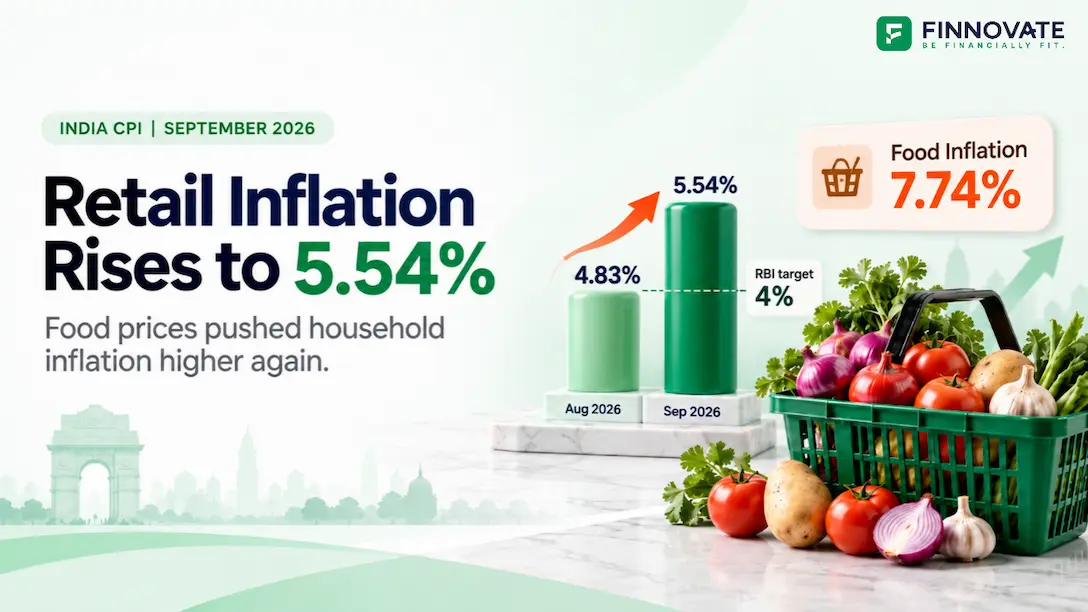
India’s CPI inflation rose to 5.54% in September 2026. Compare monthly trends, food pric...
Popular now

Learn how to easily download your NSDL CAS Statement in PDF format with our step-by-step g...

Looking for the best financial freedom books? Here’s a handpicked 2026 reading list with...

Learn what SIF investment means in India, SEBI rules, Rs 10 lakh minimum investment, avail...

Clear guide to mutual fund taxation in India for FY 2025–26 after July 2024 changes: equ...